
You do not need a complex routine to feel better as you age. Small, repeatable habits can support your energy, joints, sleep, and mood over time. Here are three gentle habits that fit easily into everyday life.
1. Rehydrate to Wake Up Your Body
The Habit:
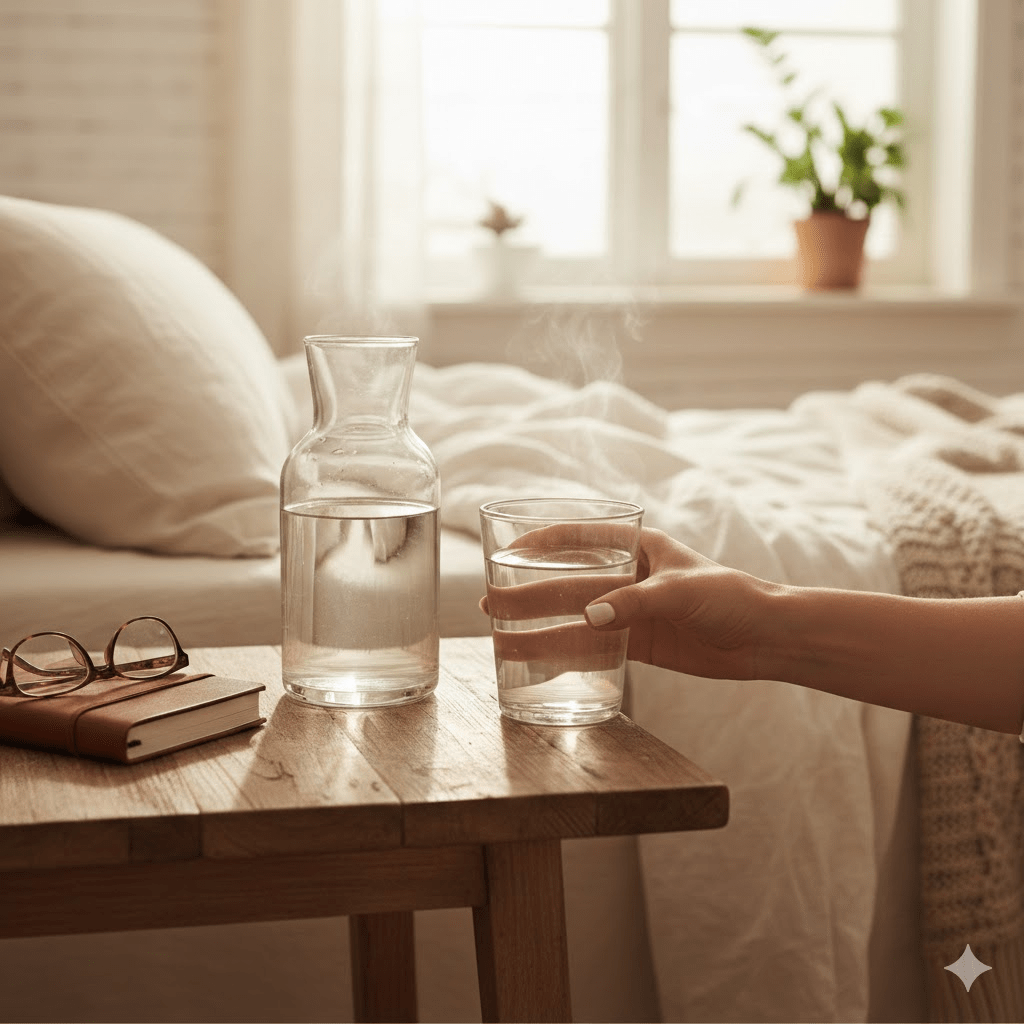
Drink a glass of warm or room‑temperature water within 10–15 minutes of waking.
Why It Matters:
After a full night’s sleep, your body is mildly dried out because you have gone many hours without drinking and still lose water when you breathe and sweat. Even being a little low on fluids can make you feel tired, foggy, or give you a slight headache.
Research in adults shows that drinking about two cups (around 500 ml) of water can make the body burn a bit more energy for about an hour—around a 30% rise in calorie burning during that time. One study estimated that drinking an extra 1.5 liters of water spread through the day can slightly increase the total calories you burn. It is not a weight‑loss miracle, but it does help your body “switch on” for the day.
Good hydration can also support:
- Heart and blood circulation.
- Kidney and digestion function.
- More steady energy and clearer thinking.
Easy Ways to Start:
- Keep a glass or bottle on your bedside table and drink it before turning on the TV or checking your phone.
- Aim for about 300–500 ml (1–2 cups).
- Warm water can feel gentler on the stomach first thing in the morning.
If you have heart or kidney issues and are on fluid restrictions, follow your doctor’s advice on how much to drink.
2. Use Morning Light to Improve Sleep and Mood

The Habit:
Get 10–15 minutes of morning light within 1–2 hours after you wake up. Going outside is best, but sitting by a bright window also helps.
Why It Matters:
As we get older, our natural sleep rhythm can shift: some people fall asleep later than they want, wake up too early, or feel tired during the day. Your body has an internal “clock” that tells it when to be awake and when to be sleepy, and the strongest signal for that clock is light.
Studies show that bright light in the morning can:
- Help set your body clock earlier, so you feel sleepy at a more regular time at night.
- Improve sleep quality and regularity.
- Support better mood and focus during the day.
In some research, people exposed to properly timed morning light shifted their internal sleep schedule by a couple of hours over several days, which shows how powerful light can be in getting your body back on track.
Easy Ways to Start:
- Take your morning drink outside and sit on the balcony, porch, or in the yard for 10–15 minutes.
- If going outside is difficult, sit by the brightest window and open the curtains fully.
- Even on cloudy days, outdoor light is much stronger than normal indoor lighting, which is helpful for your body clock.
Do not stare directly at the sun; you just need to be in the daylight.
3. Loosen Stiffness with Gentle Movement
The Habit:
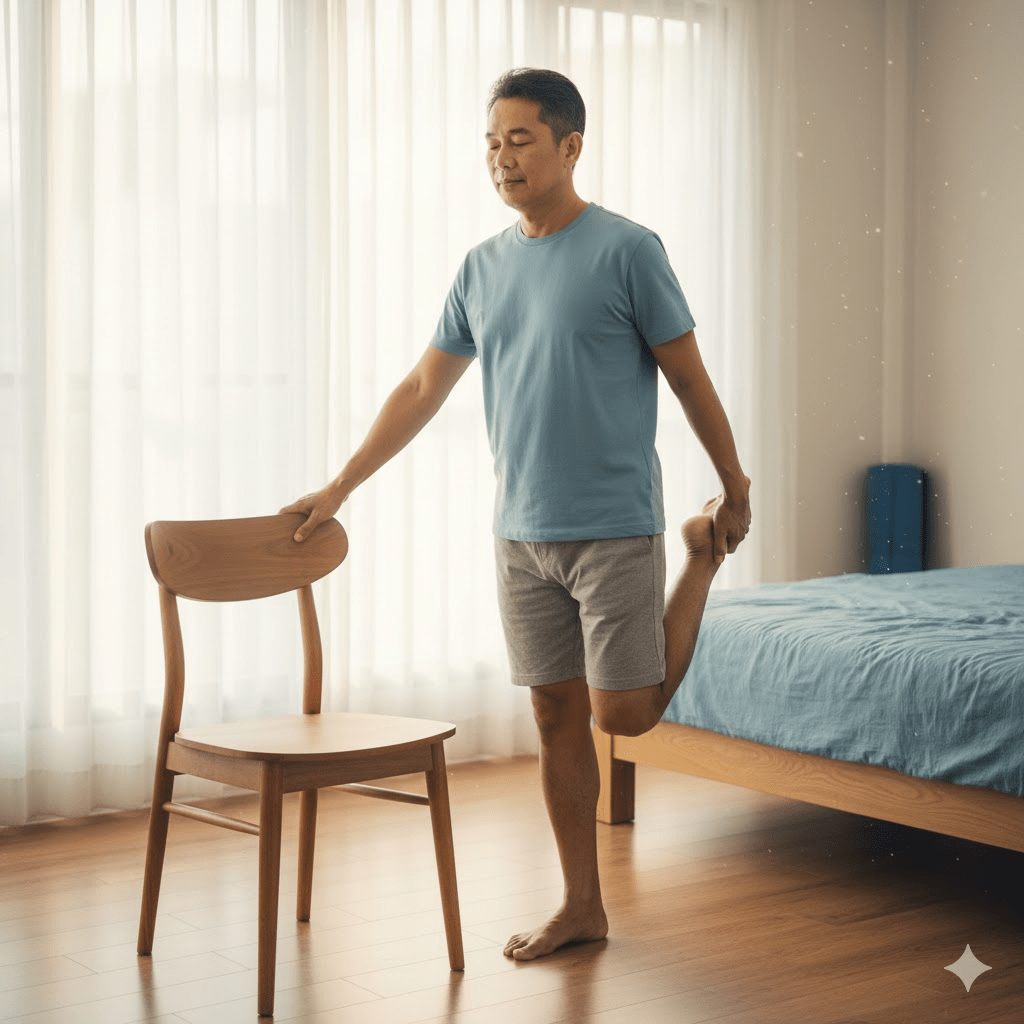
Spend 3–5 minutes lightly moving and stretching after you get out of bed, focusing on the neck, shoulders, back, and hips.
Why It Matters:
Morning stiffness is very common as we age. When you sleep, you do not move as much, so the natural “lubricating” fluid in your joints is not pumped around as actively. Joints and muscles can feel tight, heavy, or “rusty” when you first stand up.
Gentle movement:
- Gets blood flowing to your muscles and joints, bringing oxygen and nutrients that help them work better.
- Helps joint fluid move again, which can reduce that stiff, stuck feeling.
- Prepares your body for the rest of the day and may lower the chance of small strains or tweaks when you start doing chores or walking.
In conditions like arthritis, morning stiffness can be stronger and is also linked to inflammation, but movement is still an important part of keeping joints working as well as possible. Just keep it within a comfortable range and follow any advice your doctor or physiotherapist has given you.
A Simple 5‑Minute Routine:
- 1 minute: Slow, gentle circles with your shoulders and small neck turns (look left and right, up and down).
- 1–2 minutes: Easy back movement—standing or seated, gently round your back forward and then open your chest and look slightly up.
- 2 minutes: Hip circles while holding onto a chair, gentle marching in place, or slow mini‑squats as tolerated.
If you feel pain (not just mild stretching or stiffness), reduce the range of motion or stop and discuss it with a health professional.
Why Tiny Habits Work So Well
In midlife and beyond, it is often not the big, extreme changes that create lasting health, but the simple things you repeat almost every day. These small habits are easier to stick with, and over months and years they add up.
- One glass of water to wake up your system.
- One dose of morning light to support better sleep and mood.
- A few minutes of movement to ease stiffness and protect your joints.
You do not have to start all three at once. Pick the one that feels easiest and try it every morning for the next week. When it starts to feel natural, add another.
 EverHealthTips.com
Leave a comment